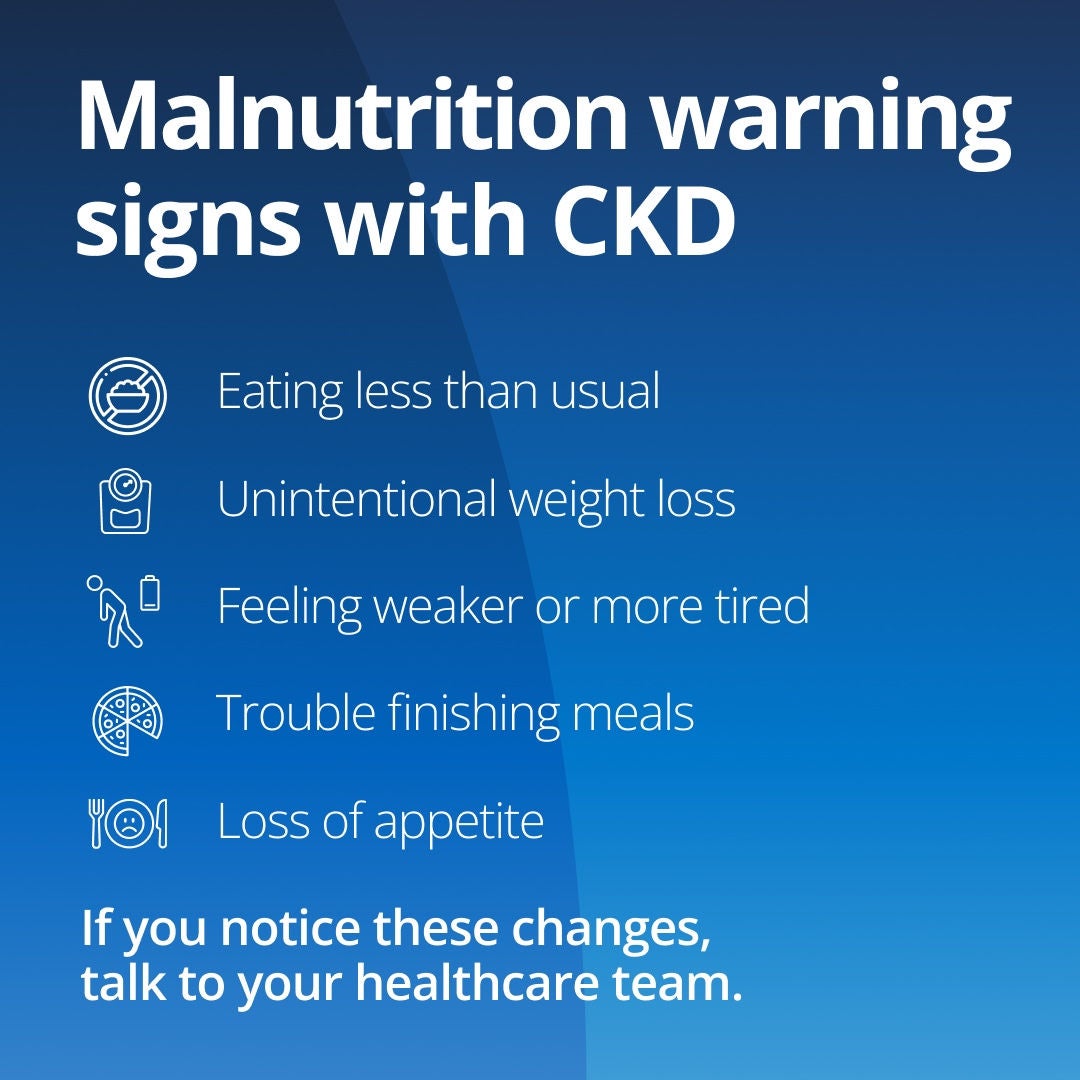
When living with chronic kidney disease (CKD), what you eat matters more than ever.
The right nutrition helps protect your remaining kidney function, manages symptoms, and supports you in making the best out of your life at every stage of your condition.
Eating Well at Every Stage
Fueling your body with better nutrition looks different depending on where you are in your journey.
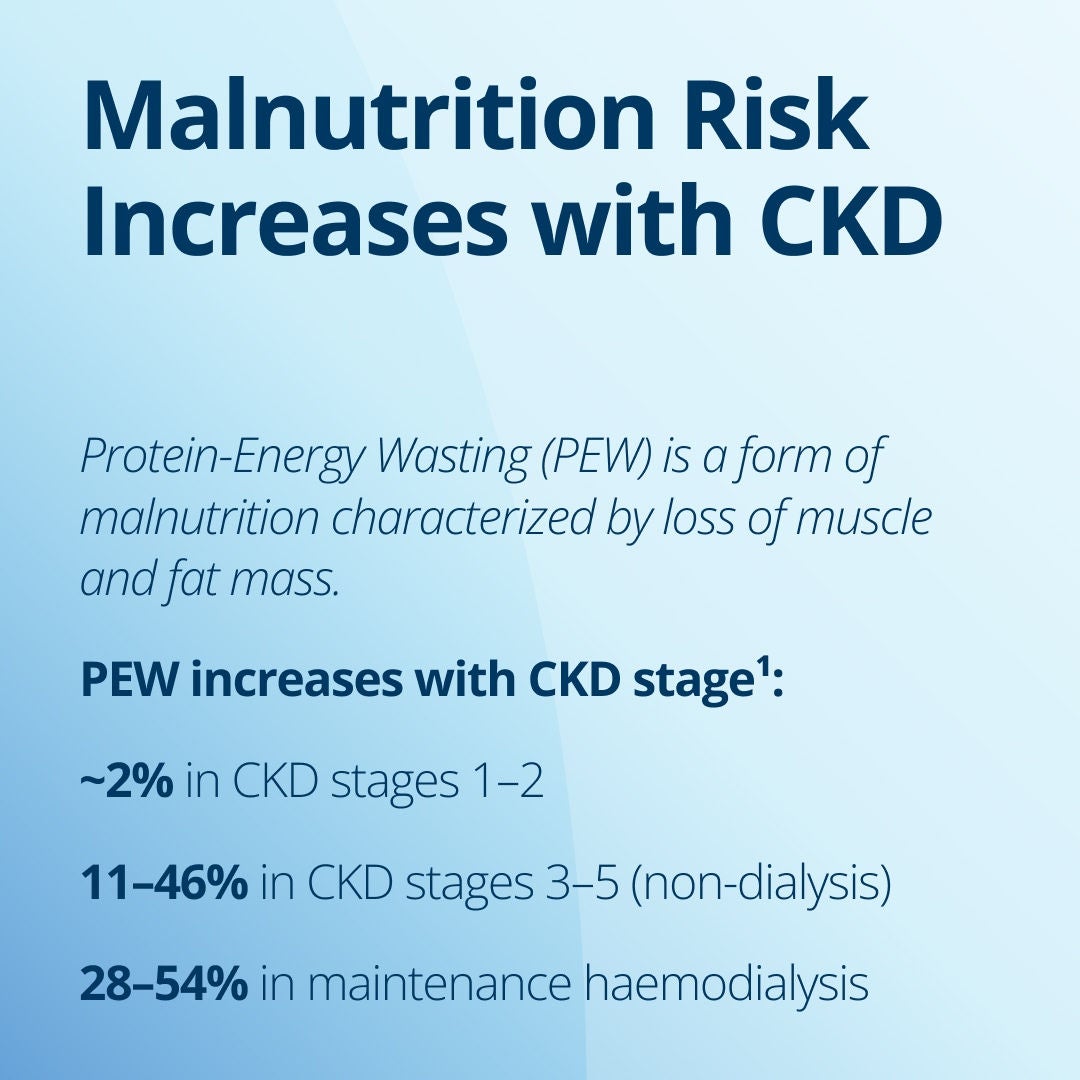
In earlier stages, the focus is on balancing energy and controlling certain foods like salt, potassium and phosphorus. If you move to dialysis, your protein needs increase to replace what treatment removes from your body and support against the increasing risk of Protein-Energy Wasting (PEW).
Your Care, Your Journey
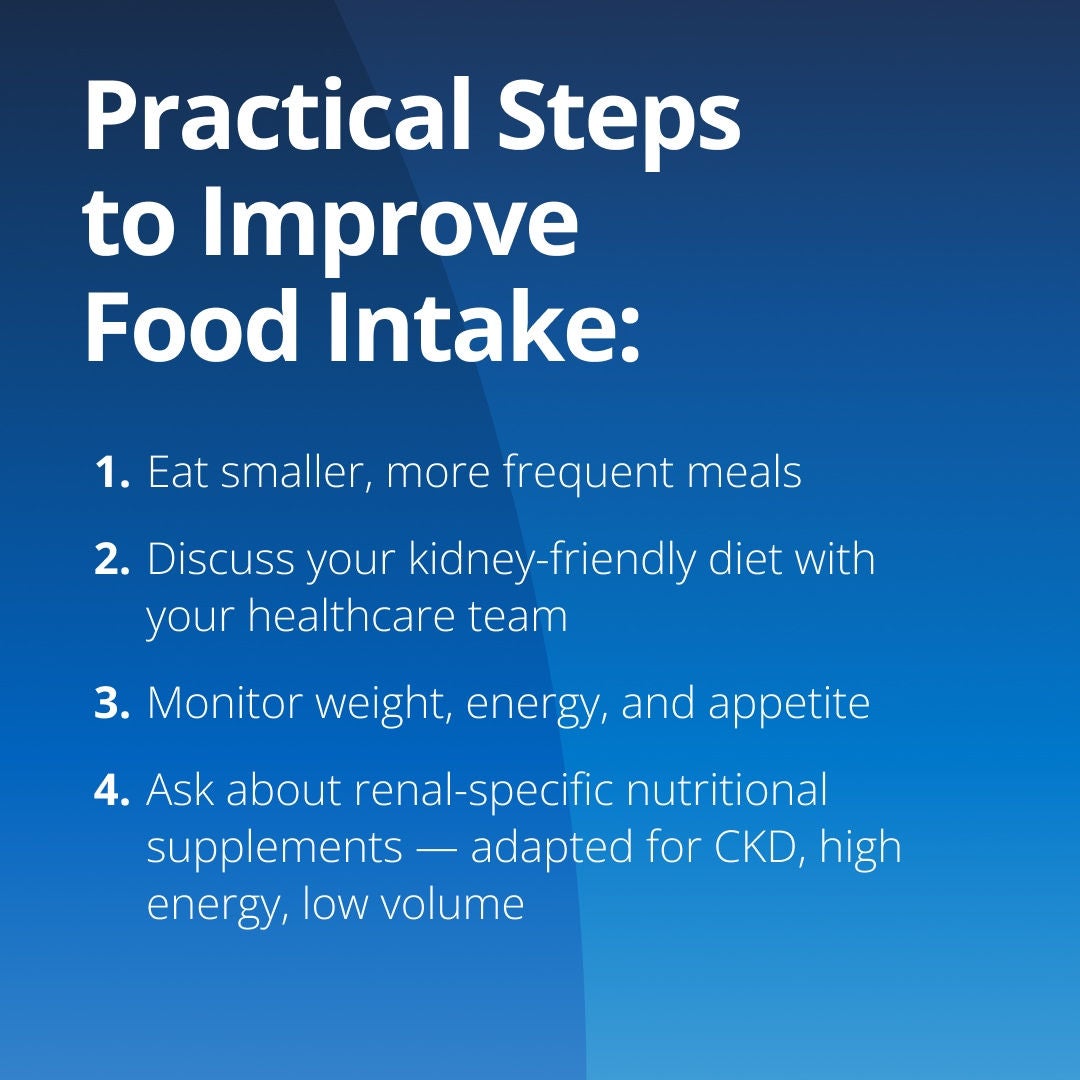
Good nutrition is not a one-size-fits-all plan. Your care team will regularly review your diet, blood results, and how you are feeling to keep your plan working for you.
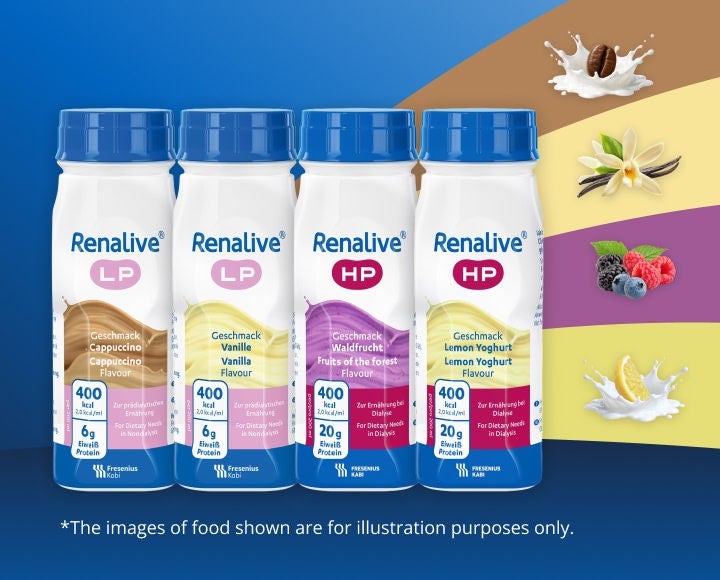
Oral nutritional supplements may also be recommended when food alone is not enough to fuel your body and support your wellbeing.