Supporting Strength and Independence as You Age

When getting older poor diet, low appetite and insufficient nutrition might weaken your muscular and skeletal health, increasing the risk of some serious issues such as sarcopenia (muscle loss), frailty, and osteoporosis. All of these factors can interlink to worsen health and reduce your quality of life. 

Maintaining optimal muscle and skeletal health is key to overall health and independent living in older age.

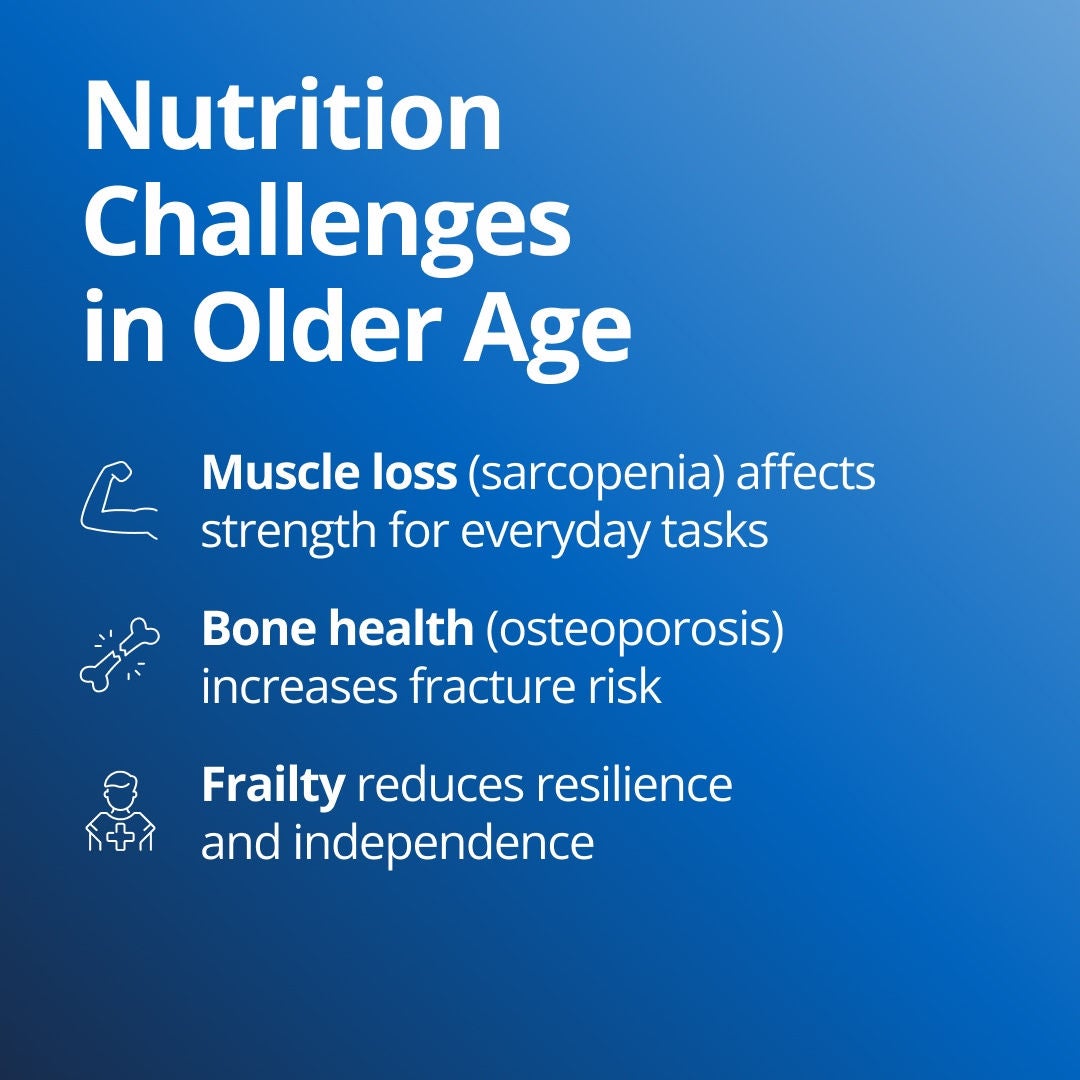
Fresubin explains that nutrition challenges in older age include: muscle loss (sarcopenia) which affects strength for everyday tasks; bone health (osteoporosis) that increases fracture risk; and frailty which reduces resilience and independence.

Practical Steps That Help

Staying active: Movement maintains muscle and bone strength. Chair exercises, short walks, and stretching all count.

Eat strategically: Include protein with every meal (eggs, fish, meat, beans, dairy). Ensure adequate vitamin D and calcium intake. Add fibre-rich foods for digestive health.

When food alone isn't enough, oral nutritional supplements with rich nutrition can help. Check the Fresubin® PRO range* to find out the best support for you.

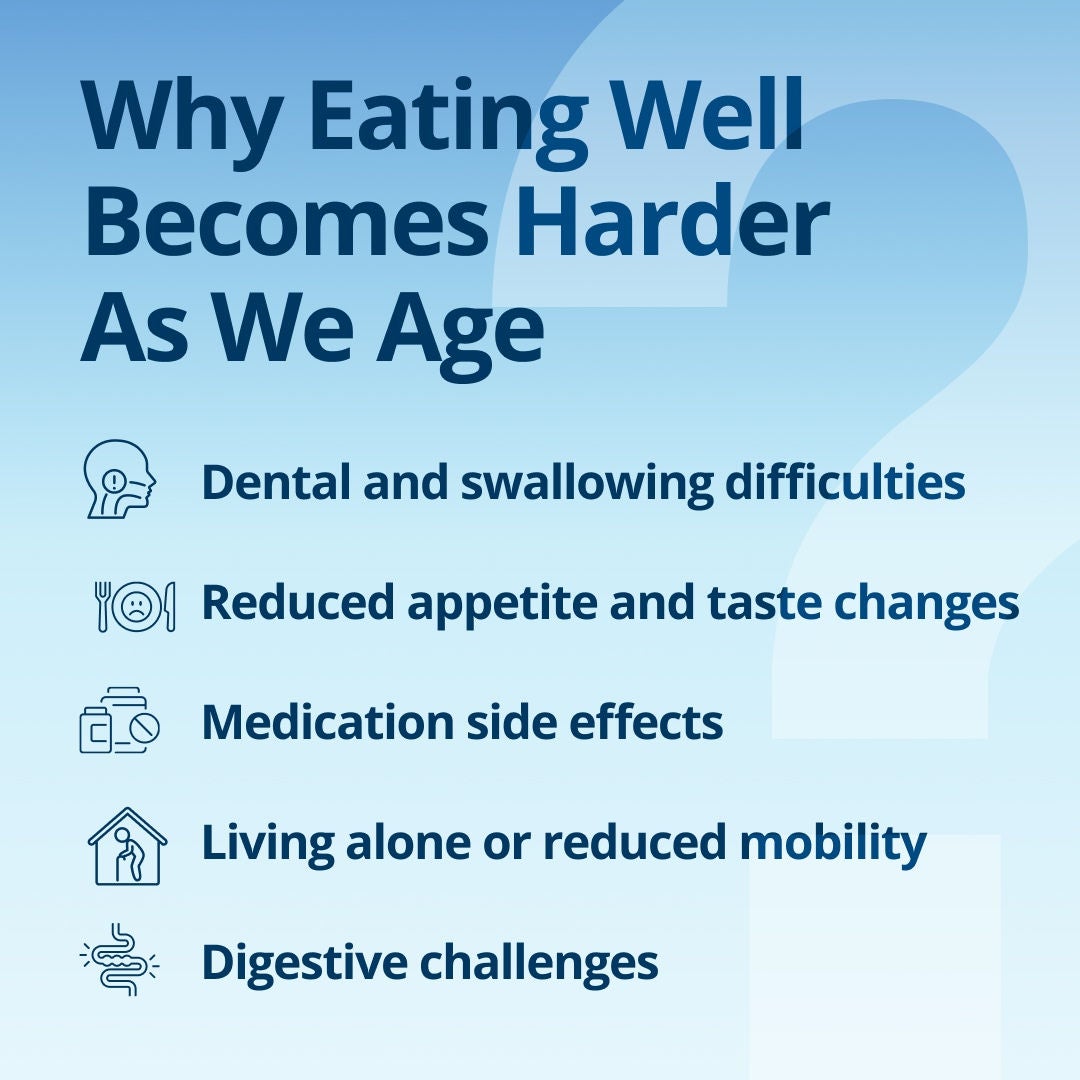
Fresubin explains that eating well becomes harder as we age because of dental and swallowing difficulties, reduced appetite and taste changes, medication side effects, living alone or reduced mobility, and digestive challenges.

When Meals Aren't Meeting Your Needs

As you age, regular food doesn't always provide enough nutrition, especially when recovering from health issues like cancer, surgery, or sometimes when just simply getting older.

Oral nutritional supplements like drinks and creams, can bridge the gap by providing concentrated nutrients in small portions comfortably. Sticking with them daily is important; having variety in different flavours and textures makes this easier in the long term. 

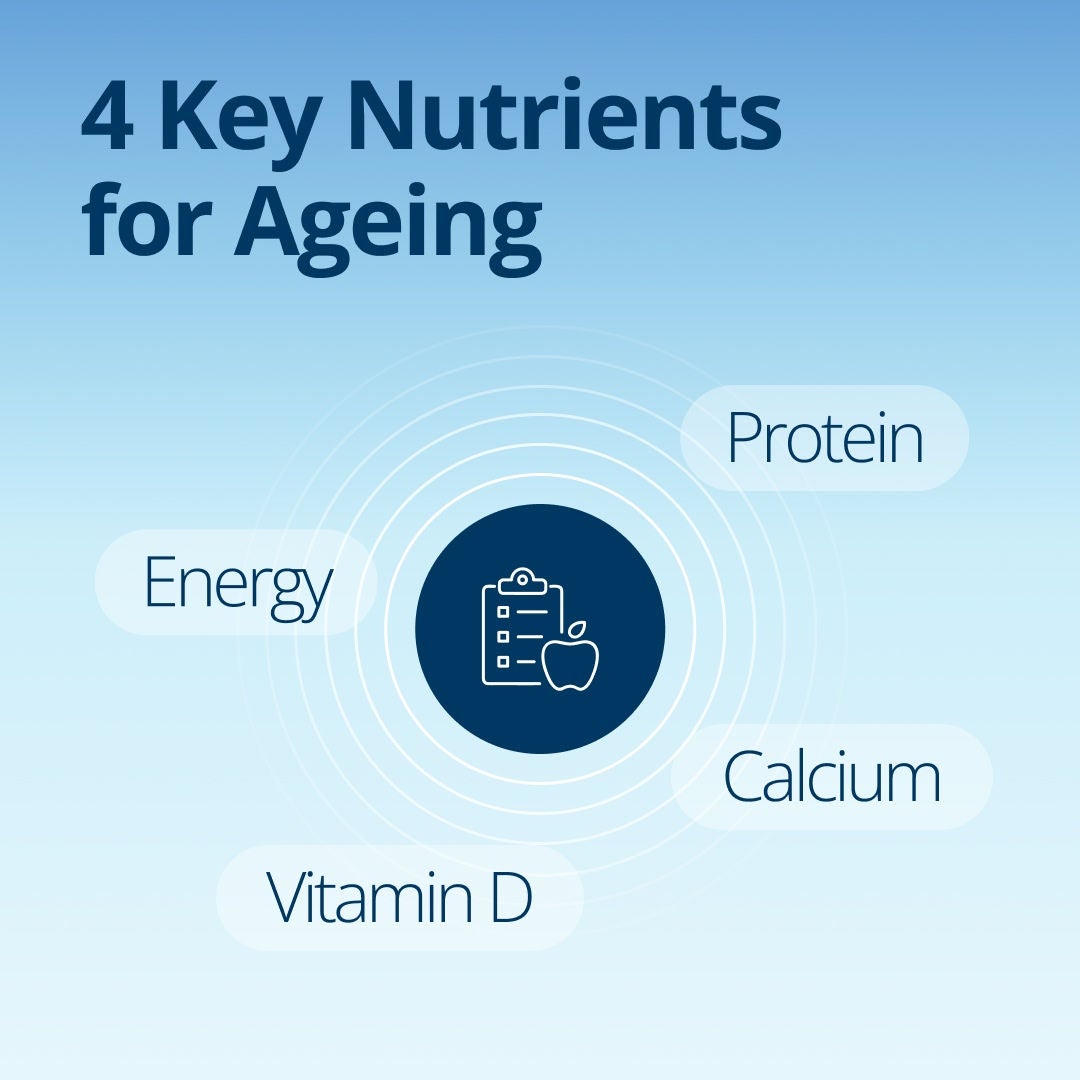
Fresubin explains that the four key nutrients for ageing are energy, protein, calcium and vitamin D.

*Fresubin PRO products are food for special medical purposes, to be used under medical supervision. For the dietary management in case/risk of malnutrition with increased energy, protein, calcium and vitamin D needs e.g. sarcopenia, frailty or age related musculoskeletal deficits.