Who is Diben for?

Living with diabetes presents challenges that can feel contradictory: managing blood sugar levels while also achieving your nutritional needs. Offering diabetes-specific support, Fresubin Diben®* Drink is a diabetes-specific oral nutritional supplement (ONS) that can help with both.

If you're experiencing unintentional weight loss, poor appetite, or avoiding certain foods due to concerns about blood sugar levels, speak with a healthcare professional about tailored support.

A lady enjoys Fresubin's Vanilla-flavoured Diben Drink that offers energy and glycaemic control to those with diabetes.

Diabetes and Oral Nutritional Support

Managing your diabetes and your nutrition should not be a challenge. Diben® Drink helps you regain control with a specially developed formula to fuel your life. 

  • Low Glycaemic Index (GI) category and modified carbohydrate profile to minimise blood glucose fluctuations
  • Tailored nutrient profile including favourable fats, and fibre, to support gut health and blood sugar control1-5.  
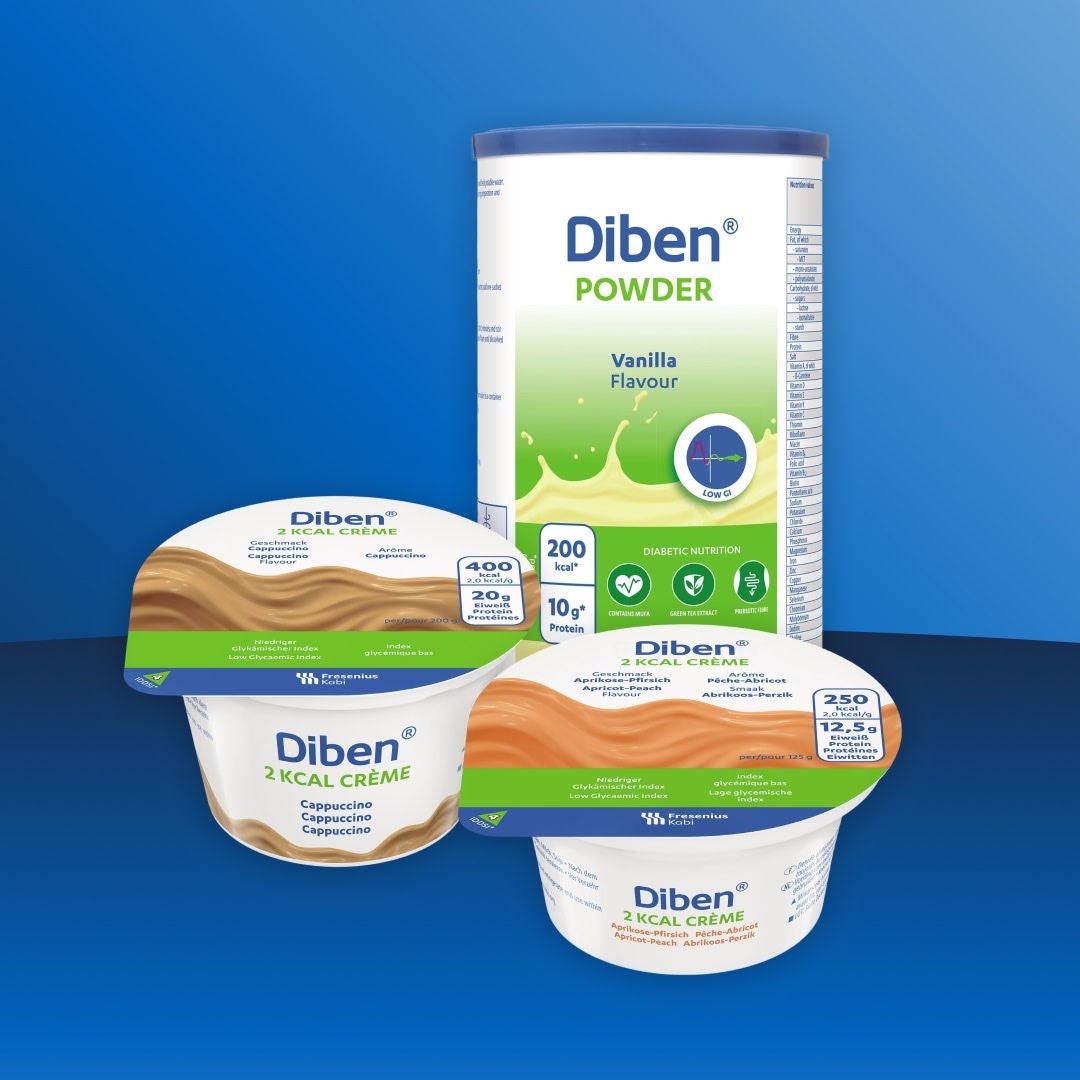
Fresubin's Diben range offers a selection of nutritional support options for those with diabetes, including Diben Vanilla-flavoured POWDER to suit a range of energy needs, as well as Cappuccino- and Apricot-Peach-flavoured Diben 2 KCAL CRÈME to support those with diabetes and dysphagia.

Regaining Control with Diben®

Incorporating oral nutritional supplements into your routine does not need to make daily life more complicated. Diben® Drink can be taken with or between meals and contains ingredients tailored to the nutritional needs of people with diabetes.

A woman holds enjoys Fresubin's Fruits-of-the-Forest-flavoured Diben Drink to support his nutritional needs and diabetes management.

*Diben® products are food for special medical purposes, to be used under medical supervision. For the dietary management of patients with/at risk of malnutrition, especially with impaired glucose metabolism. 

1Barazzoni R et al. Carbohydrates and insulin resistance in clinical nutrition: Recommendations from the ESPEN expert group. Clinical nutrition (Edinburgh, Scotland). 2017 Apr; 36(2): 355–63. 
2Sanz-París A et al. Diabetes-specific formulas high in monounsaturated fatty acids and metabolic outcomes in patients with diabetes or hyperglycaemia: A systematic review and meta-analysis. Clin Nutr, 2020;39(11): 3273-82.  
3Qian F et al. Metabolic effects of monounsaturated fatty acid–enriched diets compared with carbohydrate or polyunsaturated fatty acid–enriched diets in patients with type 2 diabetes: A systematic review and meta-analysis of randomized controlled trials. Diabetes Care, 2016; 39(8): 1448-57.  
4FAO. Fats and fatty acids in human nutrition: report of an expert consultation: 10-14 November 2008, Geneva. Rome: Food and Agriculture Organization of the United Nations; 2010. 189 p. 
5Kolida, S & Gibson GR. Prebiotic capacity of inulin-type fructans. The Journal of Nutrition, 2007; 137(11): 2503S–2506S.