
- Sustainability
Packaging plays an important role in protecting medical nutrition products throughout manufacture, distribution and use. As part of our ongoing focus on packaging design, we continue to evaluate opportunities to reduce packaging materials while maintaining product safety, quality and functionality.
However, the environmental impact of plastic use is an important consideration. Every year, the world produces over 460 million tonnes of plastic.1 The healthcare sector accounts for 5% of global plastic waste, and less than 5% of this is currently recycled.2 This highlights the importance of exploring packaging solutions that use materials more efficiently while continuing to meet the requirements of medical nutrition products.


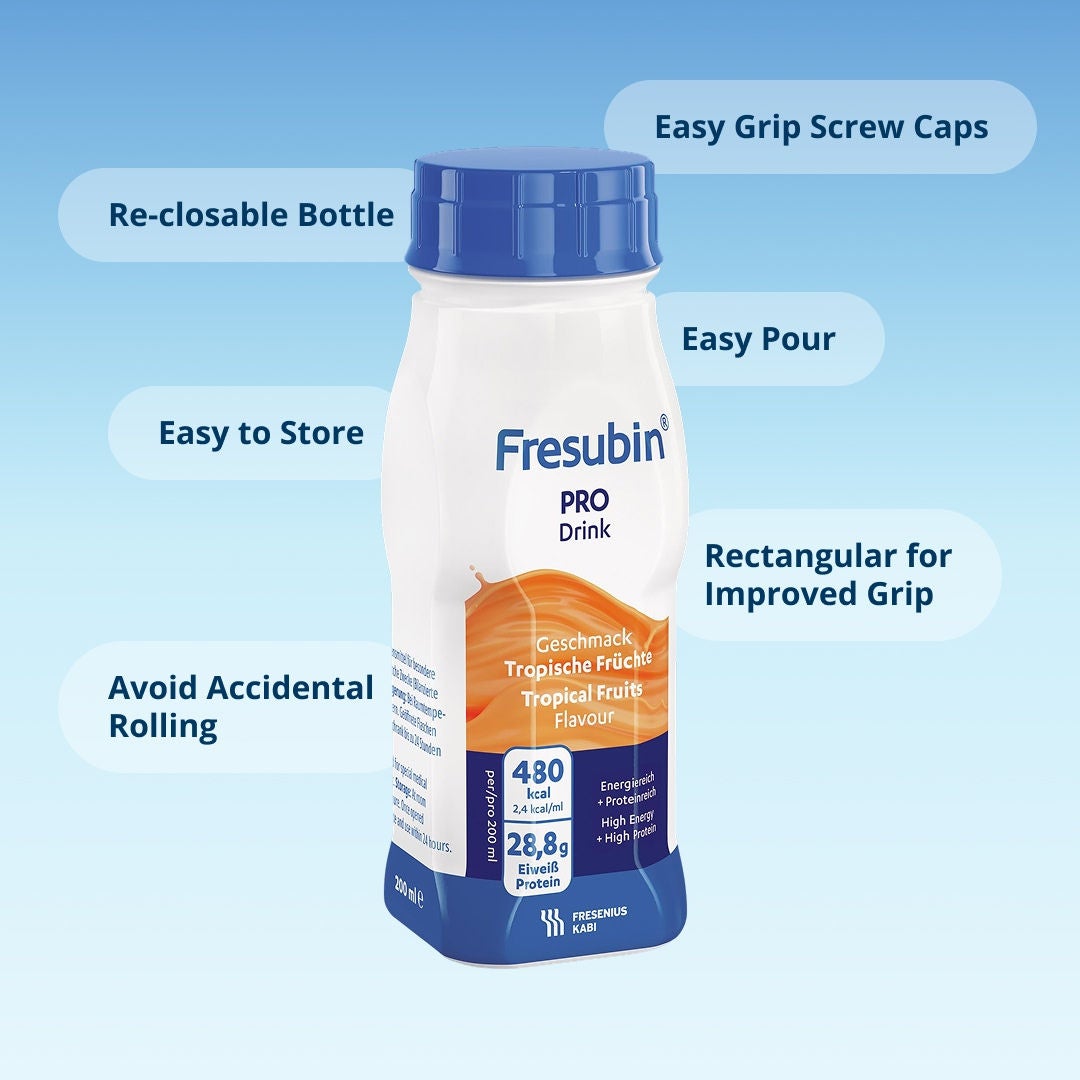
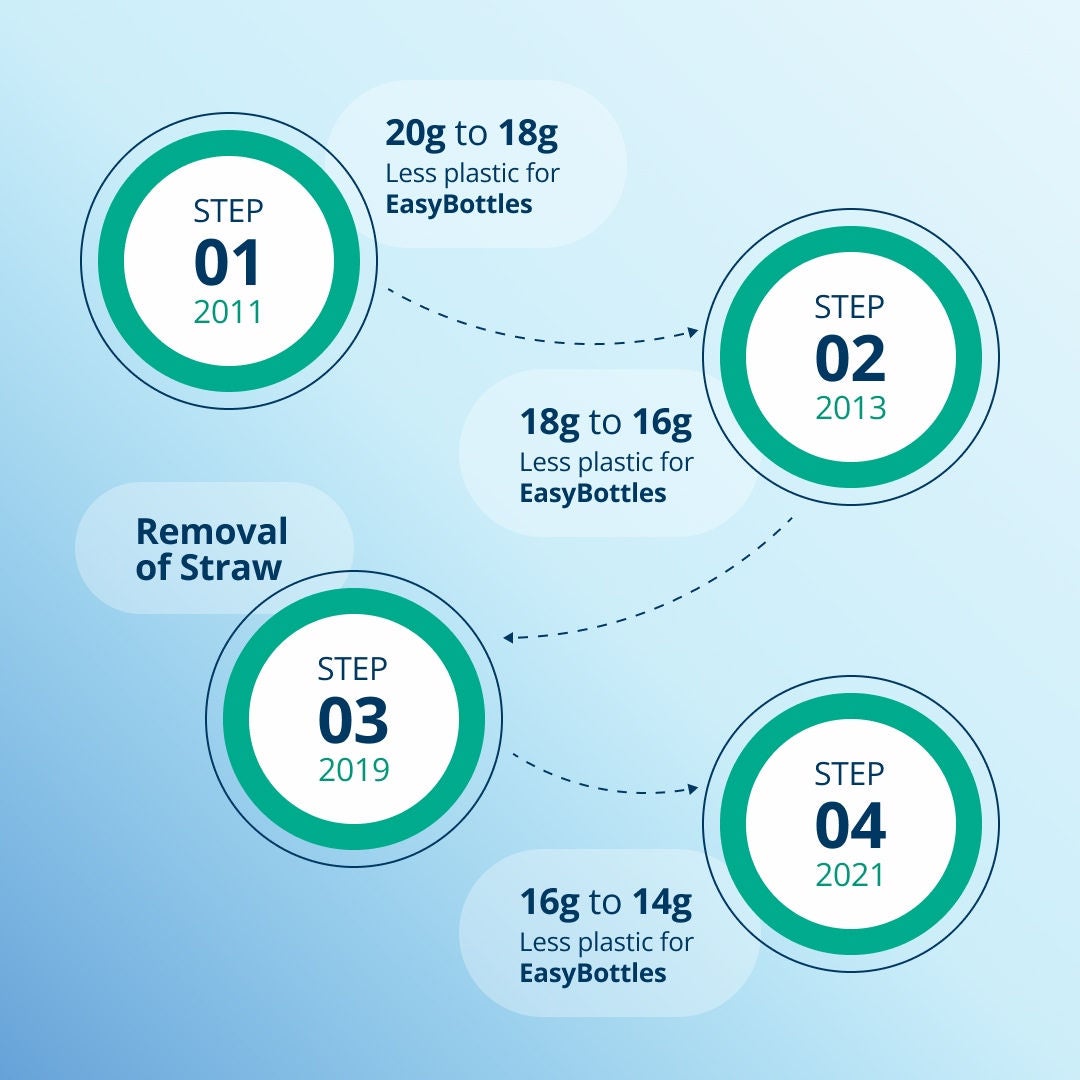
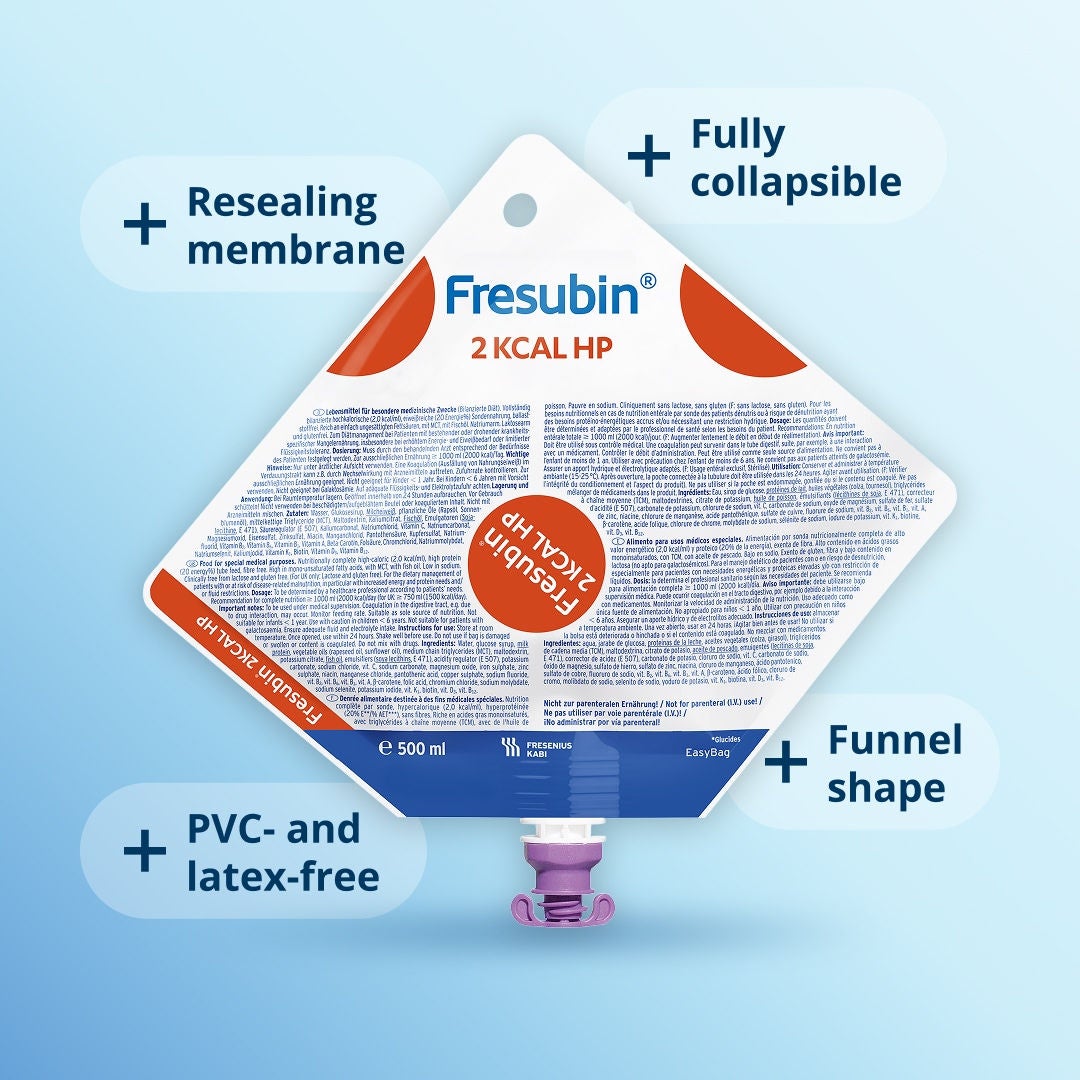
All packaging-related statements refer specifically to the EasyBottle and EasyBag containers, respectively. Figures are based on packaging material weight comparisons and are scoped to the container only, they do not refer to the product formulation or wider supply chain. No broader environmental benefit is implied beyond the specific packaging design features described.
1Onyon, Orris, Reyes. Healthcare can lead the way out of the plastic crisis. 2025.
2Eunomia. A prescription for change. 2025.
3Andrady AL, Neal MA. Philos Trans R Soc Lond B Biol Sci 2009;364(1526):1977–1984.
4North EJ, Halden RU. Rev Environ Health 2013;28(1):1–8.
5IUCN, Plastic pollution, https://iucn.org/resources/issues-brief/plastic-pollution
6Fresubin Plastic Saving June 2022
7The reduction target comprises the total emissions of both categories and the target achievement is not analyzed separately by Scope 1 and Scope 2. Of the total amount to be reduced, about 45.9% relates to Scope 1 emissions and about 54.1% relates to Scope 2 emissions.
8Fresenius has an internal recalculation policy that defines a correction of the base value and its triggers. In 2025, the base value was adjusted because the calculation methodology was revised to comply with regulatory requirements. The base-year value of 708,364 t CO2e was increased by 22,680 t CO2e. This adjustment ensures comparability with the reporting year. The targets themselves were not adjusted. The adjustment has no effect on the target achievement as the previous years and the reporting year were recalculated considering the same scope. The base year 2020 is representative in terms of business performance, the available prior-year figures, the associated data quality, and industry benchmarking. Prior-year data was compared accordingly and placed in the business context. if external factors would have an impact, they have been taken into account. - https://report.fresenius.com/2025/annual-report/sustainability-statement/environmental-information/e1-climate-change.html?tabc=5e
9Net zero emissions means that Fresenius reduces its greenhouse gas (GHG) emissions via Scope 1 to 3 as much as possible by 2050 and offsets the remaining unavoidable GHG emissions (no more than 10%).
10Fresenius has defined interim targets for the path to net zero and created a transition plan for climate protection. Detailed information on our climate targets and our transition plan can be found in our audited Sustainability Report 2025.