Nutrition Designed for Life with Chronic Kidney Disease

Living with chronic kidney disease can affect your appetite, energy levels and ability to eat enough each day. Symptoms such as nausea, fatigue and changes in taste can make meeting your nutritional needs more difficult.¹–⁵

Renalive LP is a high-energy, low-protein oral nutritional supplement designed for people with chronic kidney disease who are not receiving dialysis, or who have been advised by their healthcare professional to follow a low-protein diet.

It provides concentrated energy while supporting a low-protein nutrition plan, helping you meet your nutritional needs when food alone is not enough.⁶

A woman smiles knowing she is supported by Fresubin's Renalive range of nutritional supplements for renal patients, including Vanilla-flavoured and Cappuccino-flavoured Renalive LP, and Lemon Yoghurt-flavoured and Fruits of the Forest-flavoured Renalive HP.

Supporting Your Individual Nutrition Plan

Nutritional needs can vary depending on your health, kidney function and stage of treatment.

Renalive LP may be recommended as part of an individual nutrition plan developed by your healthcare professional. Your healthcare professional will advise you on how much to take and how it should fit alongside your usual diet.

An older couple smile together knowing they are supported by Fresubin's nutritional supplement range, including Renalive for those with reduced kidney function.

A Convenient Option for Everyday Life

Renalive LP is available in a ready-to-drink 200 mL bottle, with no preparation required. Its convenient format makes it easy to include in your routine, whether you are at home or away.

It is available in Vanilla flavour and is best served chilled.

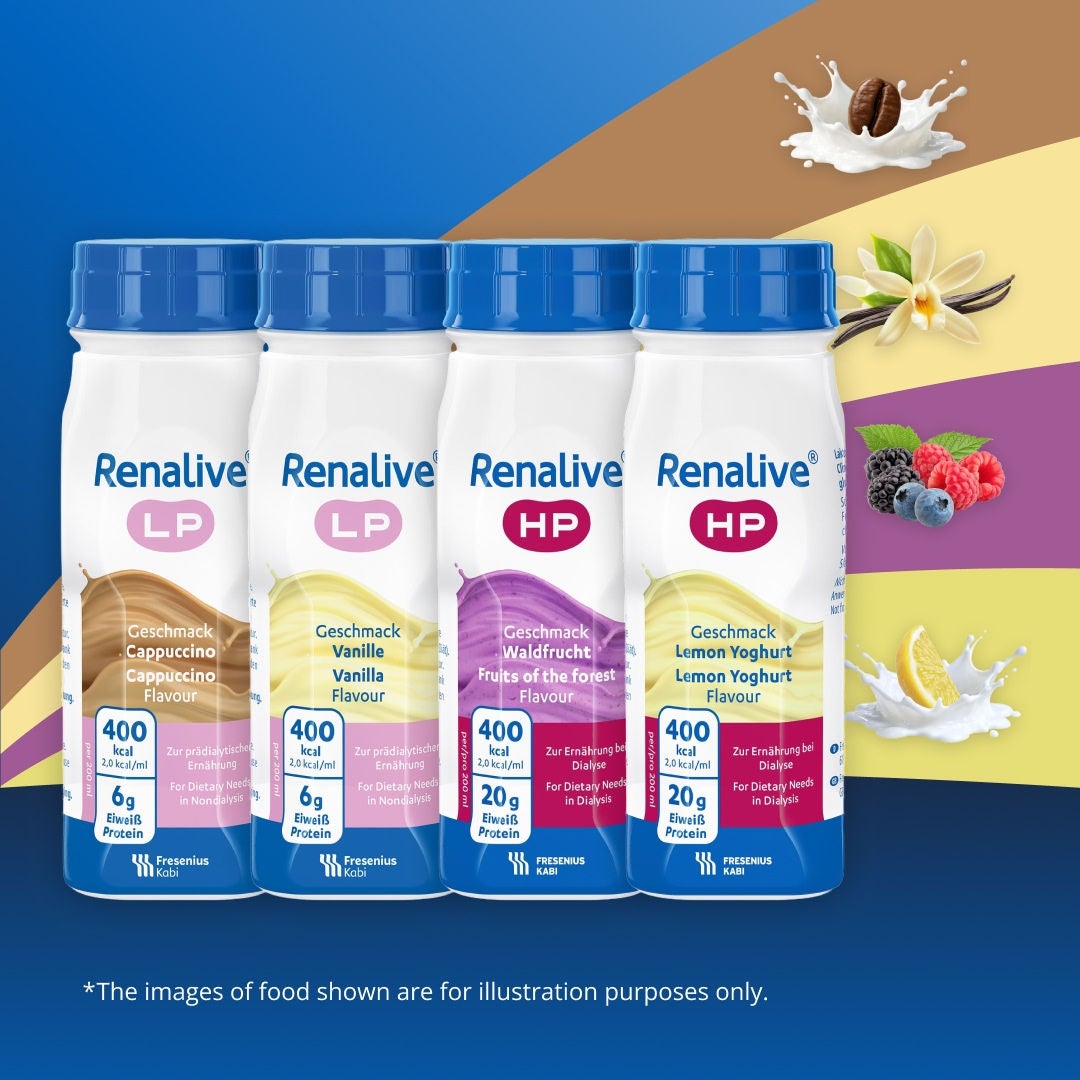
Fresubin's Renalive range includes Renalive LP in Cappuccino and Vanilla flavours, as well as Renalive HP in Fruits of the Forest and Lemon Yoghurt flavours.

*Renalive LP is a food for special medical purposes and must be used under medical supervision. For the dietary management of people with, or at risk of, disease-related malnutrition, particularly those with chronic kidney disease or non-catabolic forms of acute kidney injury.

1Kovesdy CP et al. Am J Clin Nutr. 2013;97(6):1163-77. 

2Carrero JJ et al. J Ren Nutr. 2018;28(6):380-92 

3Fiaccadori E et al. Clin Nutr. 2021;40(4):1644-68. 

4Cheng, T.C. et al. Int J Mol Sci. 2022 May 27;23(11):6047.

5Otobeet al. Curr Opin Nephrol Hypertens. 2022;31(1):109-28. 

6Ikizler et al. Am J Kidney Diseases. 2020;76:S1–107.