The Role of Nutrition in Chronic Kidney Disease (CKD)

In CKD, the body’s balance is disrupted, which puts patients at risk of malnutrition and loss of muscle and energy. Because CKD affects people differently at each stage, nutrition plans need to be flexible and adjusted as the disease progresses.1


Meeting a Diverse Set of Needs

While dietary counselling will always be a core pillar of care, a modification of the normal diet alone may not be adequate to prevent malnutrition.

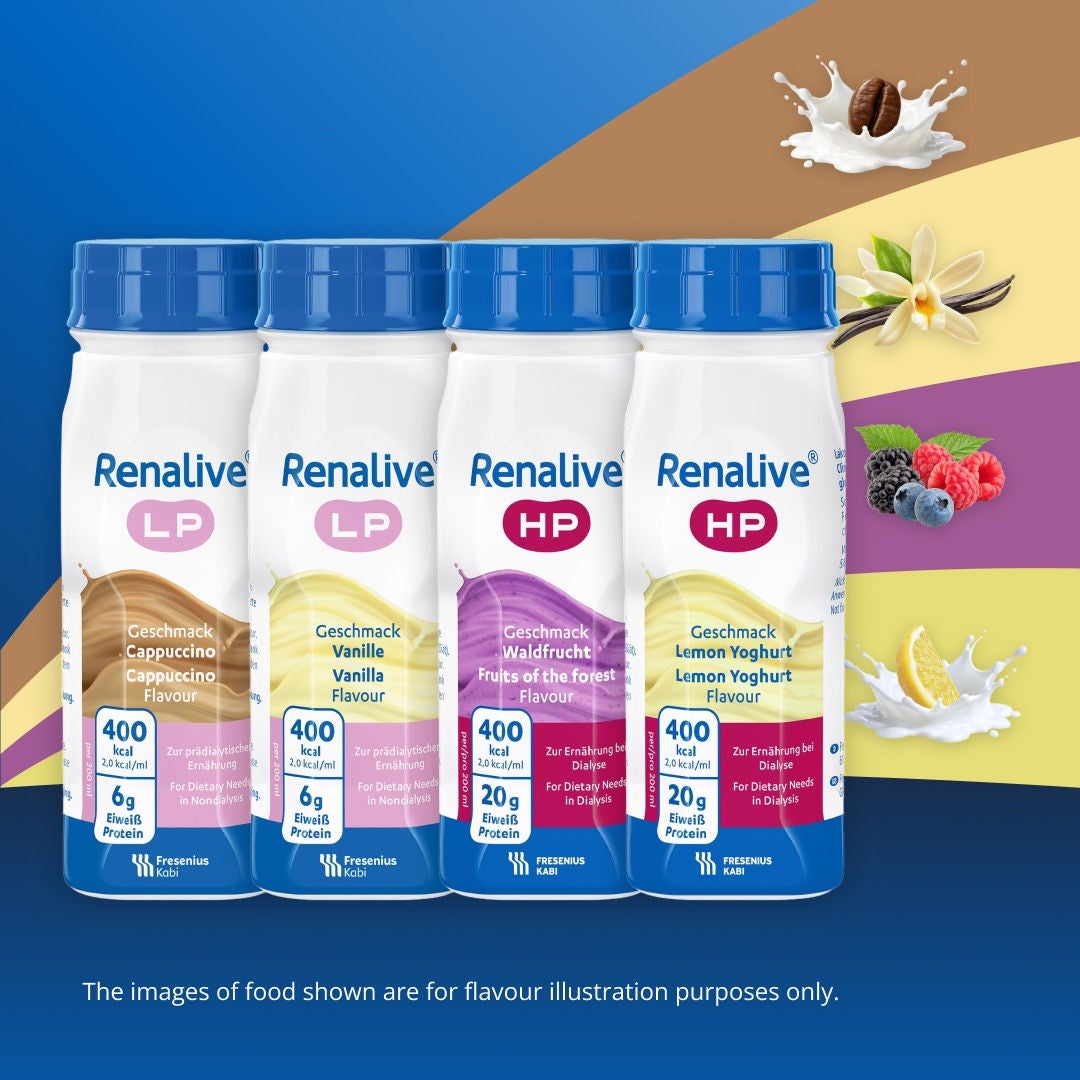
The Renalive® range* offers a variety of formulations and flavours to meet the nutrional needs that come with different treatment modalities, and personal preferences. That’s something that can greatly aid adherence.

Non-dialysis: Medical nutrition focuses on minimising metabolic stress by carefully managing protein and nutrient intake to prevent malnutrition and supporting overall health, without compromising renal function.1,2

On-dialysis: At this stage, patients' bodies need more protein to help build and maintain muscle and other tissues. High-protein ONS can support them by providing the extra protein they need.1,3

A healthcare professional uses a tablet to help her explain to a female patient with chronic kidney disease how the Fresubin range will help to support her nutritional needs.

Renalive LP and Renalive HP

In pre-dialysis, restricting protein intake is an important part of managing chronic kidney disease, helping to reduce the metabolic burden on the kidneys and slow disease progression. Renalive LP is a high-energy, low-protein oral nutritional supplement, also low in key electrolytes, designed to help patients meet their energy needs while staying within the dietary restrictions required at this stage.4

Once patients are under Dialysis treatment, their needs change. Renalive HP is a high-caloric, high protein oral nutritional supplement, low in electrolytes designed for Dialysis-Patients.

Fresubin's Renalive LP and HP ranges are designed to support those with chronic kidney disease and come in a range of flavours including Cappuccino, Vanilla, Fruits of the Forest and Lemon Yogurt.

Learn More About the CKD Nutrition Dilemma

A woman with chronic kidney disease is able to enjoy tending to her garden thanks to the nutritional support provided by Fresubin's renal range.

Targeted Nutritional Management of Chronic Kidney Disease (CKD)

Filename
Renalive_Branding_B_HCP_view_Sep2025.pdf
Size
3 MB
Format
pdf

Recommended Clinical Guidelines⁵

Screening: Adults with CKD should be screened at least biannually to identify those at risk of protein-energy wasting.

Energy provision: Aim for 25-35 kcal/kg body weight/day based on age, sex, physical activity level, body composition, weight goals, CKD stage, comorbidities and inflammation.1

ONS supplementation: In adults at risk of or with protein-energy wasting, a minimum of a 3-month trial of oral nutritional supplementation is suggested for CKD stage 3-5D or post-transplantation.1

Reducing protein intake: Aim for 0.55–0.60 g dietary protein/kg body weight/day* or 0.28–0.43 g dietary protein/kg body weight/day with additional keto acid/amino acid analogues.

*0.6 – 0.8 g in diabetic patients

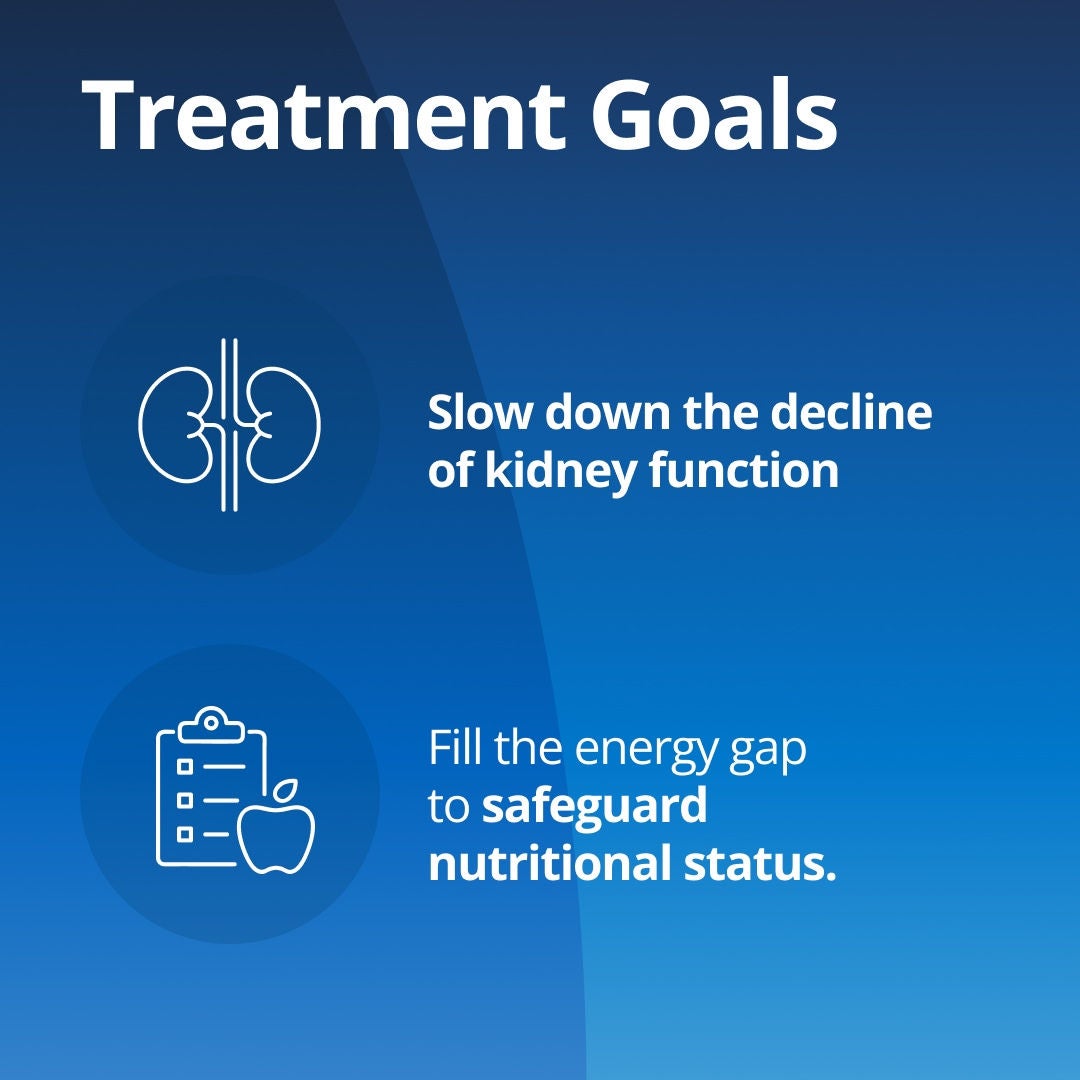
The treatment goals for those with chronic kidney disease are to slow down the decline of kidney function and fill the energy gap to safeguard nutritional status, both of which can be supported with Fresubin's nutritional range for those with CKD.

Fresubin Renalive factsheets can be downloaded here.

Renalive LP Factsheet

Filename
Renalive_LP_FS_HCP_viewPDF_Apr2026.pdf
Size
692 KB
Format
pdf

Renalive HP Factsheet

Filename
Renalive_HP_FS_HCP_viewPDF_Jul26.pdf
Size
1 MB
Format
pdf

*Fresubin products are food for special medical purposes, to be used under medical supervision.


References

1) (KDOQI -ref 1, KDIGO -ref 2, ESPEN 2024) ESPEN GL: Sabatino A, Fiaccadori E, Barazzoni R, Carrero JJ, Cupisti A, De Waele E, Jonckheer J, Cuerda C, Bischoff SC. ESPEN practical guideline on clinical nutrition in hospitalized patients with acute or chronic kidney disease. Clin Nutr. 2024 Sep;43(9):2238-2254. doi: 10.1016/j.clnu.2024.08.002. Epub 2024 Aug 20. Erratum in: Clin Nutr. 2024 Oct;43(10):2394-2398. doi: 10.1016/j.clnu.2024.09.019. PMID: 39178492.

2) Cupisti A, Gallieni M, Avesani CM, D'Alessandro C, Carrero JJ, Piccoli GB. Medical Nutritional Therapy for Patients with Chronic Kidney Disease not on Dialysis: The Low Protein Diet as a Medication. J Clin Med. 2020 Nov 12;9(11):3644. doi: 10.3390/jcm9113644. PMID: 33198365; PMCID: PMC7697617.

3) Arroyo-Serrano P, Alonso-Dominguez R, Mas-Fontao S, Gonzalez-Parra E, Sánchez-Tocino ML. Nutritional Strategies to Address Malnutrition in Dialyses Patients: A Systematic Review. Nutrients. 2025 Nov 5;17(21):3478. doi: 10.3390/nu17213478. PMID: 41228549; PMCID: PMC12608553.

4) Oliveira et al. Semin Dial. 2019;32:493–9

For legal reasons, the following information is intended for healthcare professionals only. Please confirm that you are a healthcare professional before continuing.

If you are not a healthcare professional, please select No to be redirected to the appropriate consumer page.