The Clinical and Nutritional Challenge of Dysphagia

Dysphagia presents a dual clinical challenge, compromising both the safety and adequacy of nutritional intake. Early recognition, structured swallowing assessment and appropriate nutritional intervention are essential components of effective management.1,2,3


The Dual Challenge of Dysphagia

Dysphagia doesn’t just make intake more difficult. It can make it dangerous. By choosing oral nutritional supplements (ONS) alongside food and beverage thickeners that comply with IDDSI standards, you can help patients safely meet their nutritional needs, even when swallowing is a significant challenge. 3-5

Alongside early recognition of symptoms and continual reviews of swallowing safety, thickened liquids and texture-modified foods can provide a patient-centric way to help avoid malnutrition and its associated complications.3-6

A lady holding a purple mug enjoys a Vanilla-flavoured Fresubin Thickened Level 2 Drink in her kitchen as part of her daily nutritional intake and dysphagia management.

Sufficient Nutrition with Safe Swallowing

Malnutrition is a serious threat to health, and dysphagia can compound it: physiological dangers often develop into psychological barriers, with a fear of eating becoming a serious long-term issue 1,2

The Fresubin® range* of drinks and powders not only offers a variety of formulations to meet specific nutritional needs, but also a variety of textures. By choosing an IDDSI option that matches your patients’ swallowing ability, or by using thickening powders, you can help build confidence in their eating, providing a strong foundation for better outcomes.3-5

A woman smiles towards the camera as she prepares food in her kitchen using Fresubin's dysphagia range to help meet her nutritional needs.

When The Stakes Are High, Adherence Matters

For people living with dysphagia, eating and drinking can be a source of significant anxiety and discomfort; intake avoidance can lead to dehydration and malnutrition.1,2  It is vital to meet their personal preferences, not just their nutritional needs. 8,9

As well as providing safe-swallow textures, the Fresubin range features powdered and high-energy density drinkable options. Additionally, it provides a variety of flavours for patients to choose from.

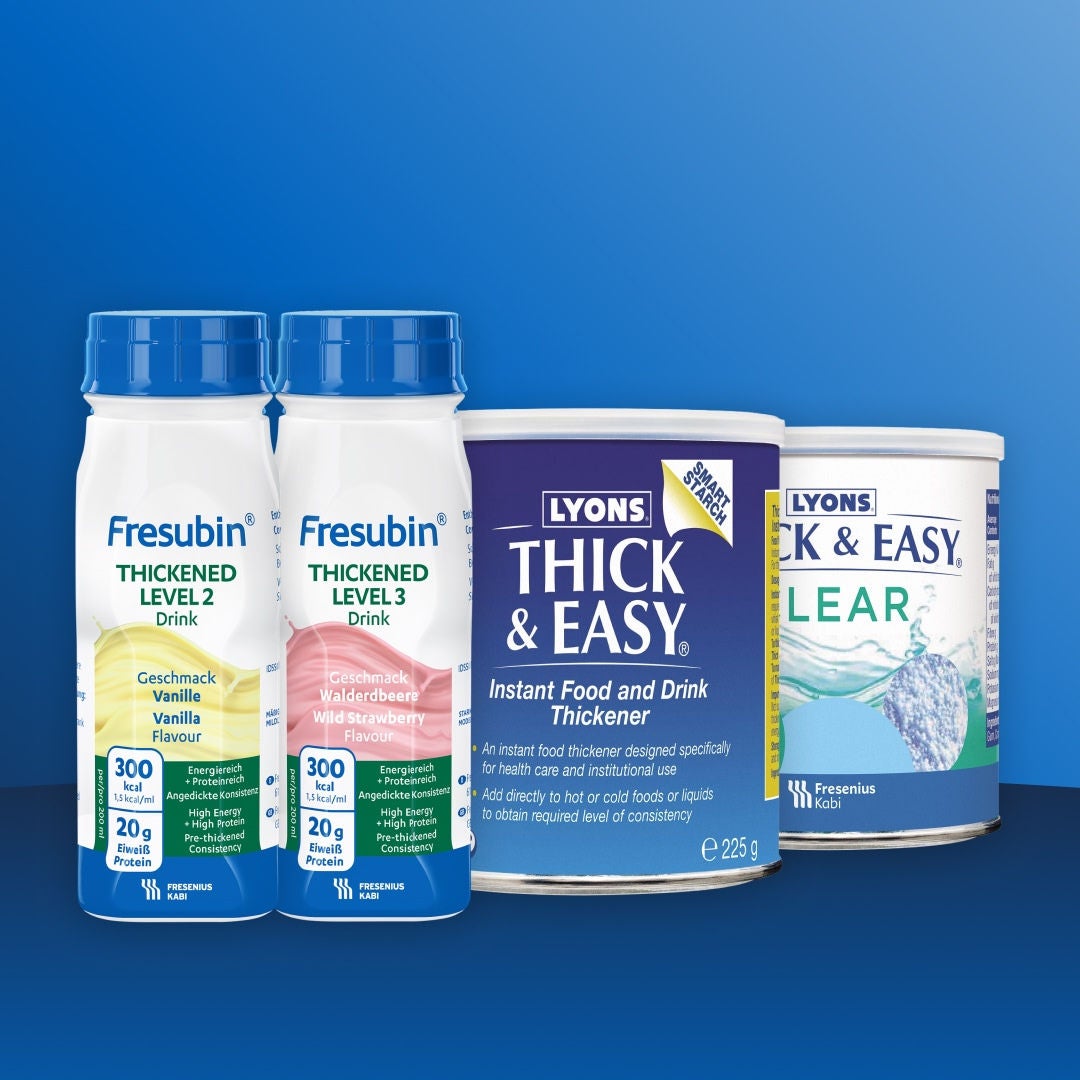
Fresubin's range of nutritional supplements for those with dysphagia includes THICKENED LEVEL 2 and LEVEL 3 Drinks, as well as Thick&Easy and Thick&Easy Clear powders.

From Severe Dysphagia to Dining Out

Following a brain haemorrhage, a 57-year old female patient** was left with severe dysphagia. As part of her recovery, thickened fluids were taken orally, alongside tube feeding.

At 12 months, the patient was thriving. She was eating and drinking well, including enjoying

meals out with family and friends. She had also gained weight with no reliance on enteral

tube feeding for nutrition or hydration needs, and all medications could be managed orally.

**Clinical scenario. For Healthcare Professionals only. To be used under medical supervision. This case does not imply guaranteed outcomes.

A woman holding a grey mug smiles softly knowing her dysphagia management and nutritional needs are supported by Fresubin's supplements.

Our Dysphagia Evidence Booklet

A woman with glasses discusses her dysphagia management options with her healthcare professional, including Fresubin's nutritional supplements.

Evidence Summary

Filename
Dysphagia_Evidence_Booklet_HCP_0826_View.pdf
Size
1 MB
Format
pdf

Product factsheets can be downloaded here.

Thick & Easy Factsheet

Filename
ThickandEasy_FS_HCP_viewPDF_Aug2026.pdf
Size
630 KB
Format
pdf

Fresubin THICKENED LEVEL 2 / 3 Drink Factsheet

Filename
Fresubin_ThickenedDrink_FS_HCP_Mar2023.pdf
Size
636 KB
Format
pdf

Thick & Easy Clear Factsheet

Filename
ThickandEasyClear_FS_HCP_viewPDF_Aug2026.pdf
Size
626 KB
Format
pdf
*Fresubin products are food for special medical purposes, to be used under medical supervision.


References:

1) McCarty EB, Chao TN. Dysphagia and Swallowing Disorders. Medical Clinics of North America. 2021 Sep;105(5):939–54.

2) McGinnis CM, Homan K, Solomon M, Taylor J, Staebell K, Erger D, et al. Dysphagia: Interprofessional Management, Impact, and Patient-Centered Care. Nutrition in Clinical Practice. 2019 Feb;34(1):80–95.

3) Thibault R, Abbasoglu O, Ioannou E, Meija L, Ottens-Oussoren K, Pichard C, et al. ESPEN guideline on hospital nutrition. Clinical Nutrition. 2021 Dec;40(12):5684–709.

4) Sella, Weiss O. What could go wrong? Non-standardized versus standardized food texture classification. International Journal of Language & Communication Disorders. 2022 Nov;57(6):1244–54.

5) The IDDSI Standard - Standards - IDDSI

6) Holdoway A, Page F, Bauer J, Dervan N, Maier AB. Individualised Nutritional Care for Disease-Related Malnutrition: Improving Outcomes by Focusing on What Matters to Patients. Nutrients. 2022 Aug;14(17):3534.

7) Reyes-Torres CA, Castillo-Martínez L, Reyes-Guerrero R, Ramos-Vázquez AG, Zavala-Solares M, Cassis-Nosthas L, et al. Design and implementation of modified-texture diet in older adults with oropharyngeal dysphagia: a randomized controlled trial. Eur J Clin Nutr. 2019 Jul;73(7):98996.

8) Viñas P, Bolivar-Prados M, Tomsen N, Costa A, Marin S, Riera SA, et al. The Hydration Status of Adult Patients with Oropharyngeal Dysphagia and the Effect of Thickened Fluid Therapy on Fluid Intake and Hydration: Results of Two Parallel Systematic and Scoping Reviews. Nutrients. 2022 Jun 16;14(12):2497.

9) Vidal-Casariego A, González-Núñez S, Pita-Gutiérrez F, Lugo-Rodríguez G, Martínez-Ramonde T. Acceptance of different types of thickeners, with and without flavoring, in hospitalized patients with dysphagia — A pilot study. Nutr Hosp. 2021 Oct 13;38(5):1082-1088.

For legal reasons, the following information is intended for healthcare professionals only. Please confirm that you are a healthcare professional before continuing.

If you are not a healthcare professional, please select No to be redirected to the appropriate consumer page.