

- The Fresubin® 2KCAL Range
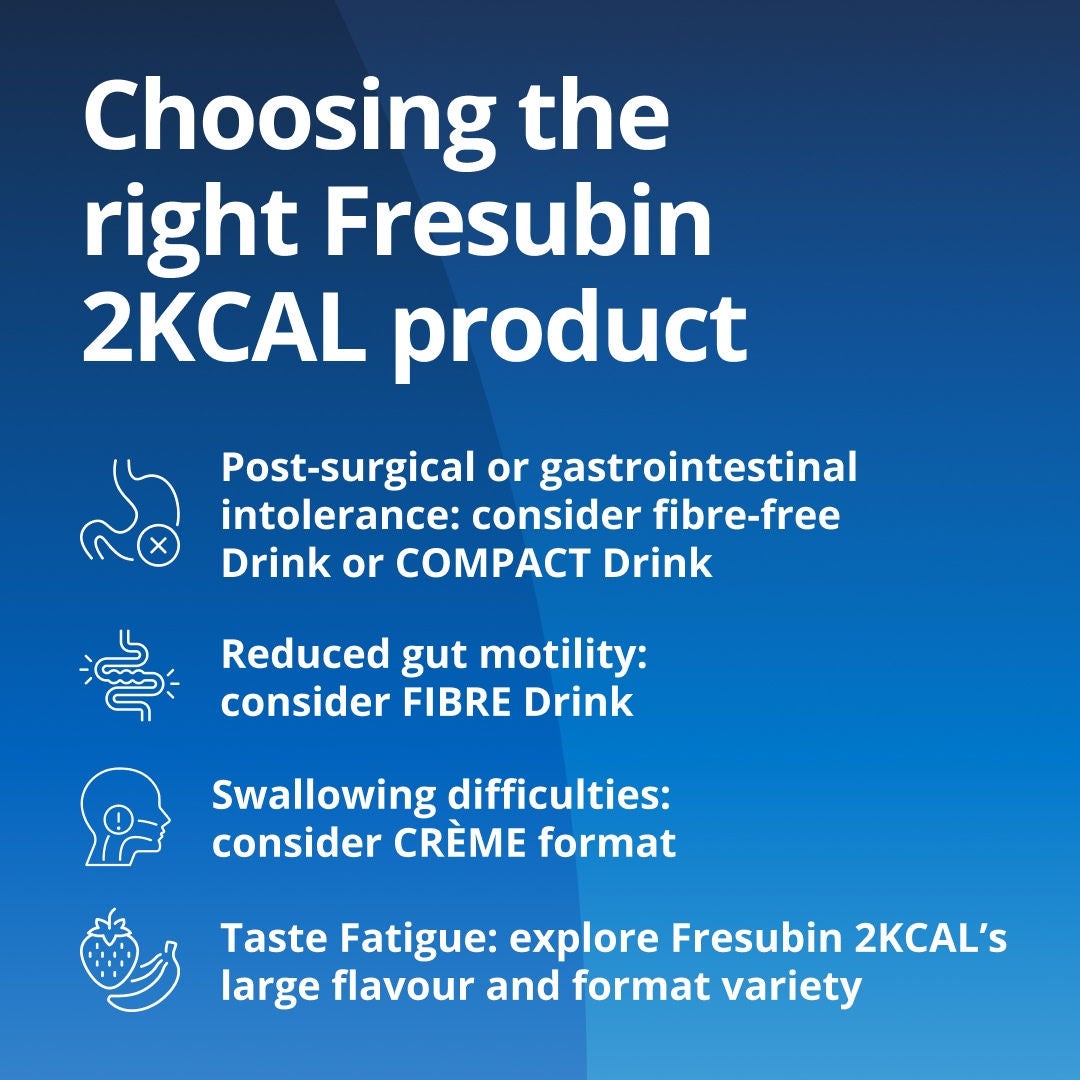
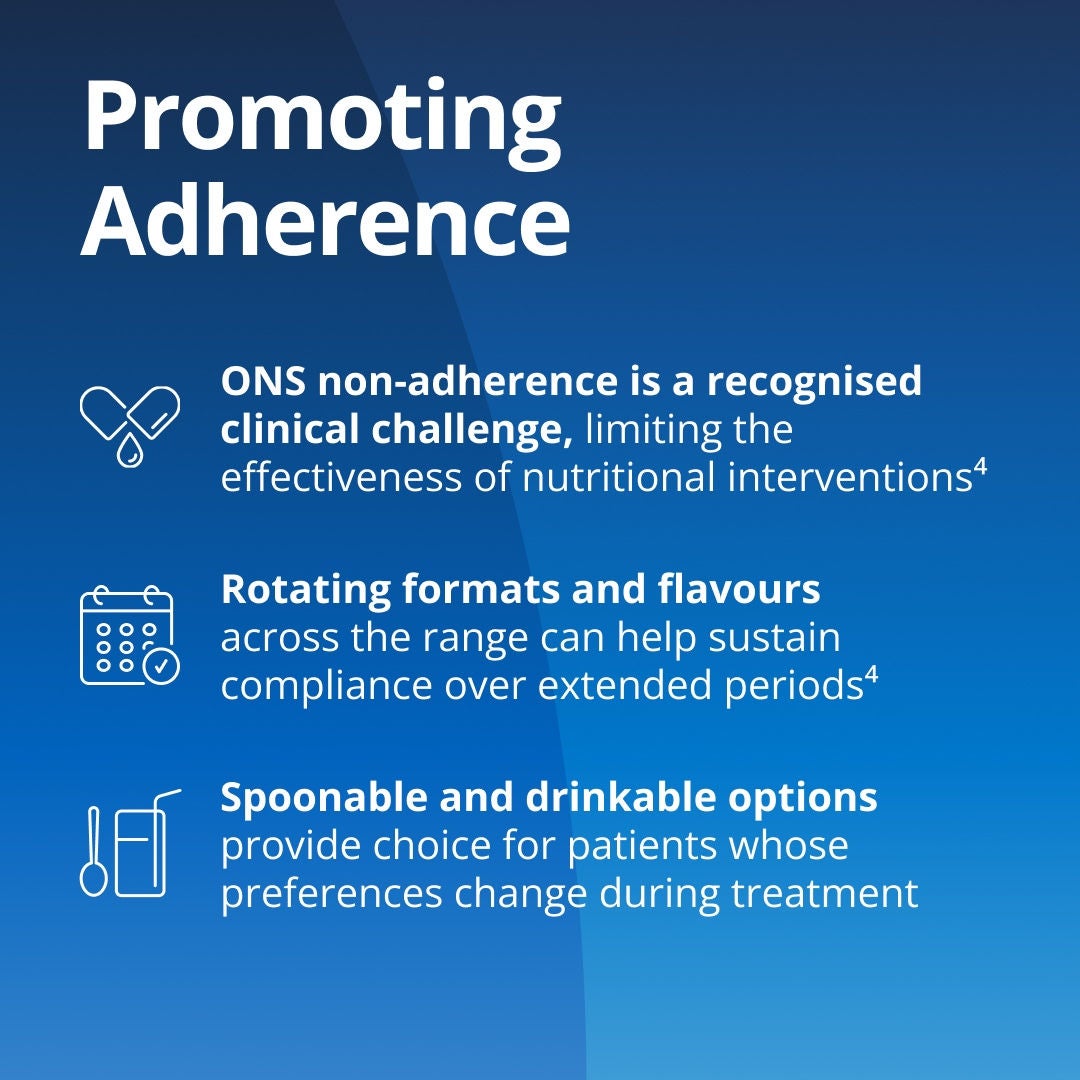
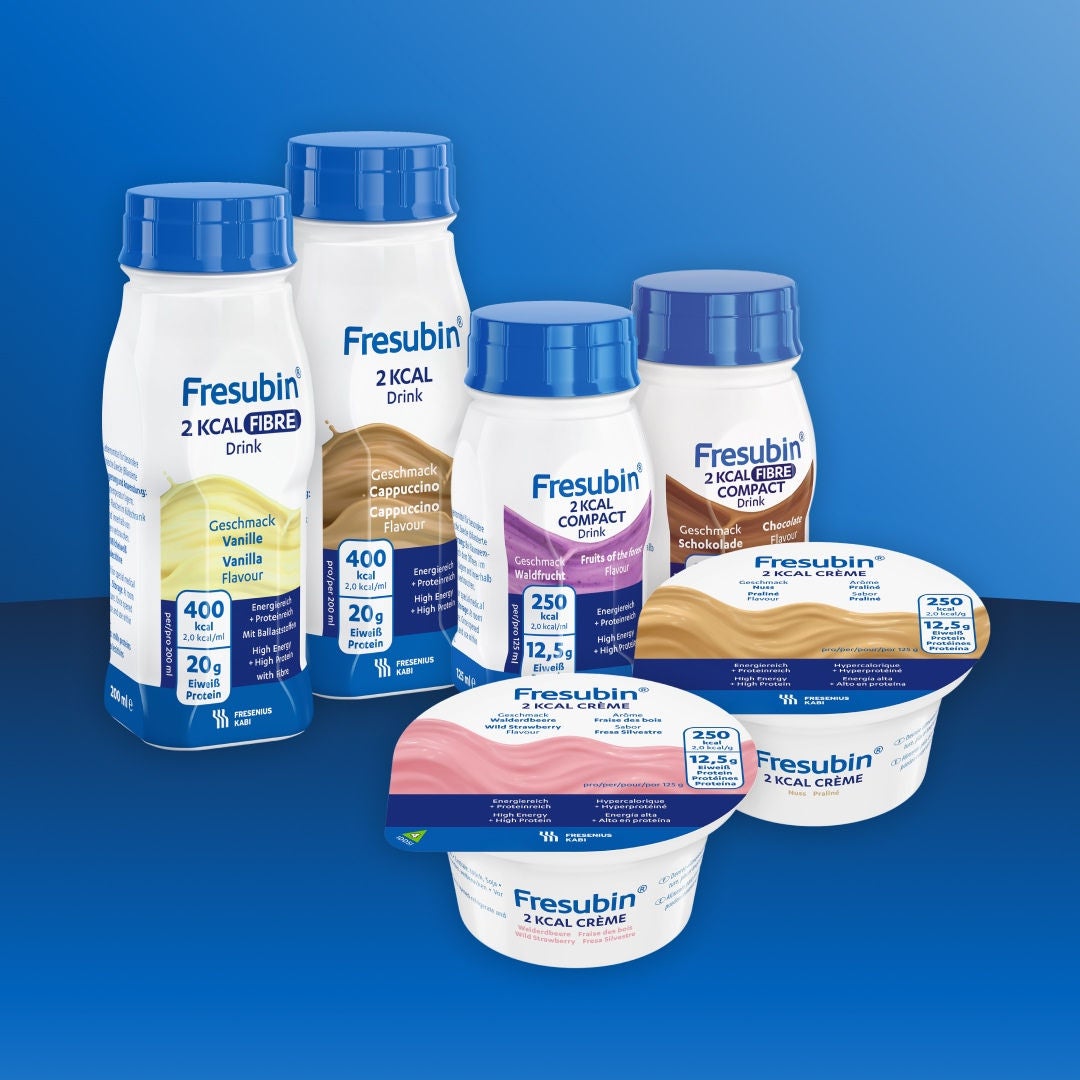
Fresubin 2 KCAL is a high-energy, high-protein oral nutritional supplement range available in various formats, to suit differing clinical needs and patient preferences. With up to eight flavours across the range, it offers the greatest variety in the Fresubin portfolio to support adherence and minimise taste fatigue.
- Energy Support: ESPEN recommends at least 400 kcal/day from ONS for patients with or at risk of malnutrition.¹
- Protein Support: High-protein ONS may support nutritional, functional and clinical outcomes across care settings.2,3,4
- Micronutrient Support: Vitamin D, calcium, in addition to all essential vitamins, minerals and trace elements, help meet daily requirements.5,6,7




Fresubin 2 KCAL factsheets can be downloaded here.
Fresubin 2 KCAL CRÈME Factsheet
- Filename
- Fresubin_2kcalCreme_FS_HCP_Jul26.pdf
- Size
- 415 KB
- Format
Fresubin 2 KCAL / 2 KCAL FIBRE Drink Factsheet
- Filename
- Fresubin_2kcal(Fibre)_Drink_FS_Aug2026.pdf
- Size
- 1 MB
- Format
Fresubin 2 KCAL HP / 2 KCAL HP FIBRE Factsheet
- Filename
- FS_Fresubin_2kcalHP2kcalHPFibre_FS_HCP_Jul26.pdf
- Size
- 2 MB
- Format
*Fresubin products are food for special medical purposes, to be used under medical supervision.
**SAM Sensory Test Results for Fresubin 2kcal DRINK Vanilla /Sensory panel consisting of 11 trained panelists according to QDA methodology (country scope: DE, FR, CH, GB, ES, N=140)
References:
1) Volkert D, Beck AM, Cederholm T, Cruz-Jentoft A, Hooper L, Kiesswetter E, Maggio M, Raynaud-Simon A, Sieber C, Sobotka L, van Asselt D, Wirth R, Bischoff SC. ESPEN practical guideline: Clinical nutrition and hydration in geriatrics. Clin Nutr. 2022 Apr;41(4):958-989. doi: 10.1016/j.clnu.2022.01.024. Epub 2022 Mar 5. PMID: 35306388.
2) Cawood AL, Elia M, Stratton RJ: Systematic review and meta-analysis of the effects of high-protein oral nutritional supplements. Ageing Res Rev 2012, 11: 278–296
3) Paddon-Jones, D. and B.B. Rasmussen, Dietary protein recommendations and the prevention of sarcopenia. Curr Opin Clin Nutr Metab Care, 2009. 12(1): p.86-90.
4) Bauer J, Biolo G, Cederholm T, et al. Evidence-based recommendations for optimal dietary protein intake in older people: a position paper from the PROT-AGE Study Group. J Am Med Dir Assoc. 2013;14(8):542-559
5) EFSA NDA Panel. (2016). Scientific opinion on dietary reference values for vitamin D. EFSA Journal, 14(10), 4547. 13.
6) Deutsche Gesellschaft für Ernährung. (2018). DA-CH Referenzwerte für die Nährstoffzufuhr: 3. Ergänzungslieferung. Neuer Umschau Buchverlag. 14.
7) Morley, J.E. et al. (2013). Frailty consensus: A call to action. Journal of American Medical Directors Association, 14(6), 392-7. 15.
8) Milne AC, Potter J, Vivanti A. et al. Protein and energy supplementation in elderly people at risk from malnutrition. Cochrane Database Syst Rev. 2009;(2):CD003288.