
- 永續發展
塑膠是醫療用口服營養產品的重要包裝材料,它能支援無菌製造、保護敏感配方,且具備輕量與耐用的特性。在醫療保健領域,塑膠組件與包裝系統目前已不可或缺,能確保產品的安全性、無菌性、不易碎性,並提升製程效率。
然而,迄今為止生產的所有塑膠中,超過一半是在過去 20 年內製造的,且產量預計將持續上升。¹ 醫療保健產業佔全球塑膠廢棄物的 5%,而其中目前僅有不到 5% 被回收利用。² 我們持續尋求方法,在不影響產品安全或品質的前提下,減少包裝中所使用的塑膠量。³˒⁴


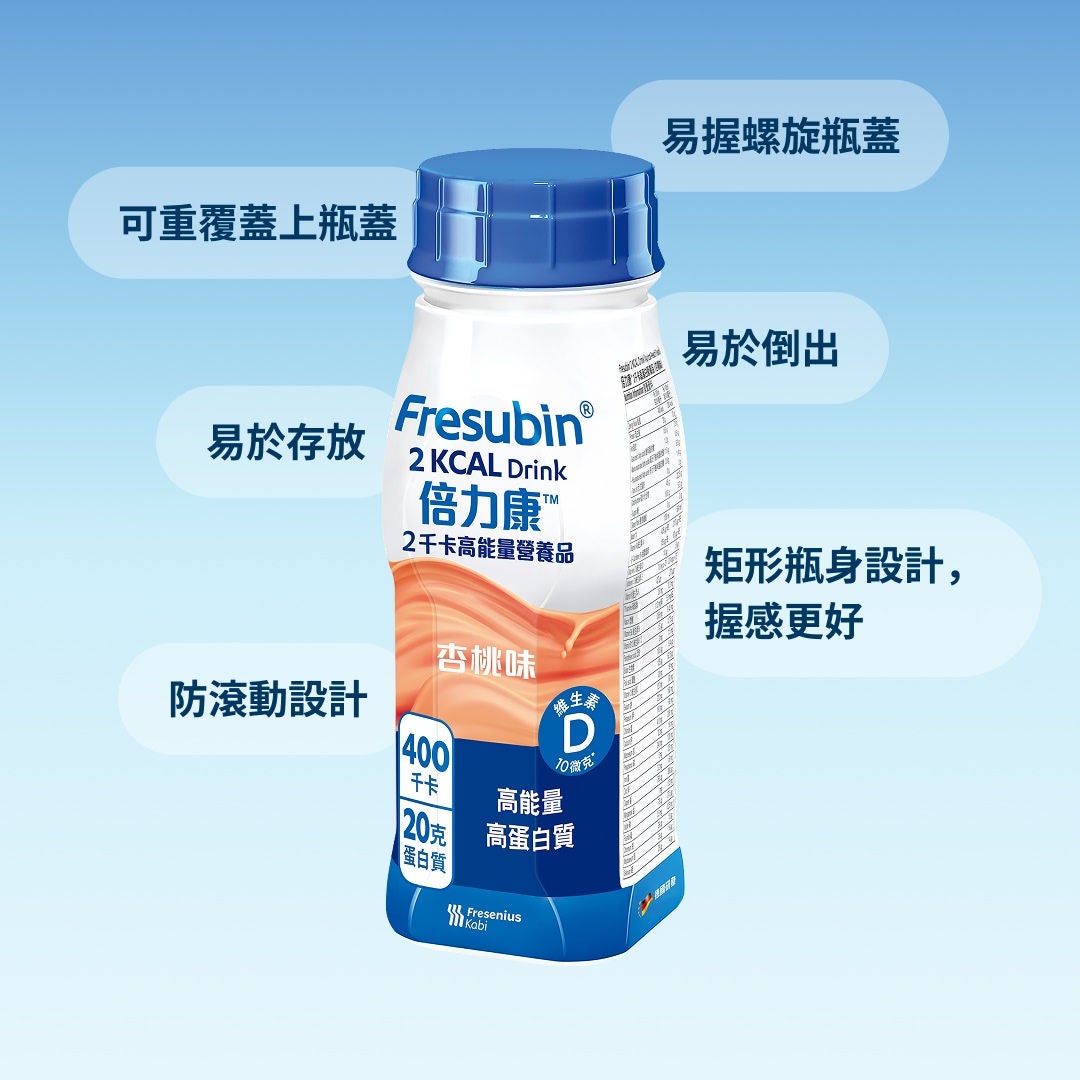
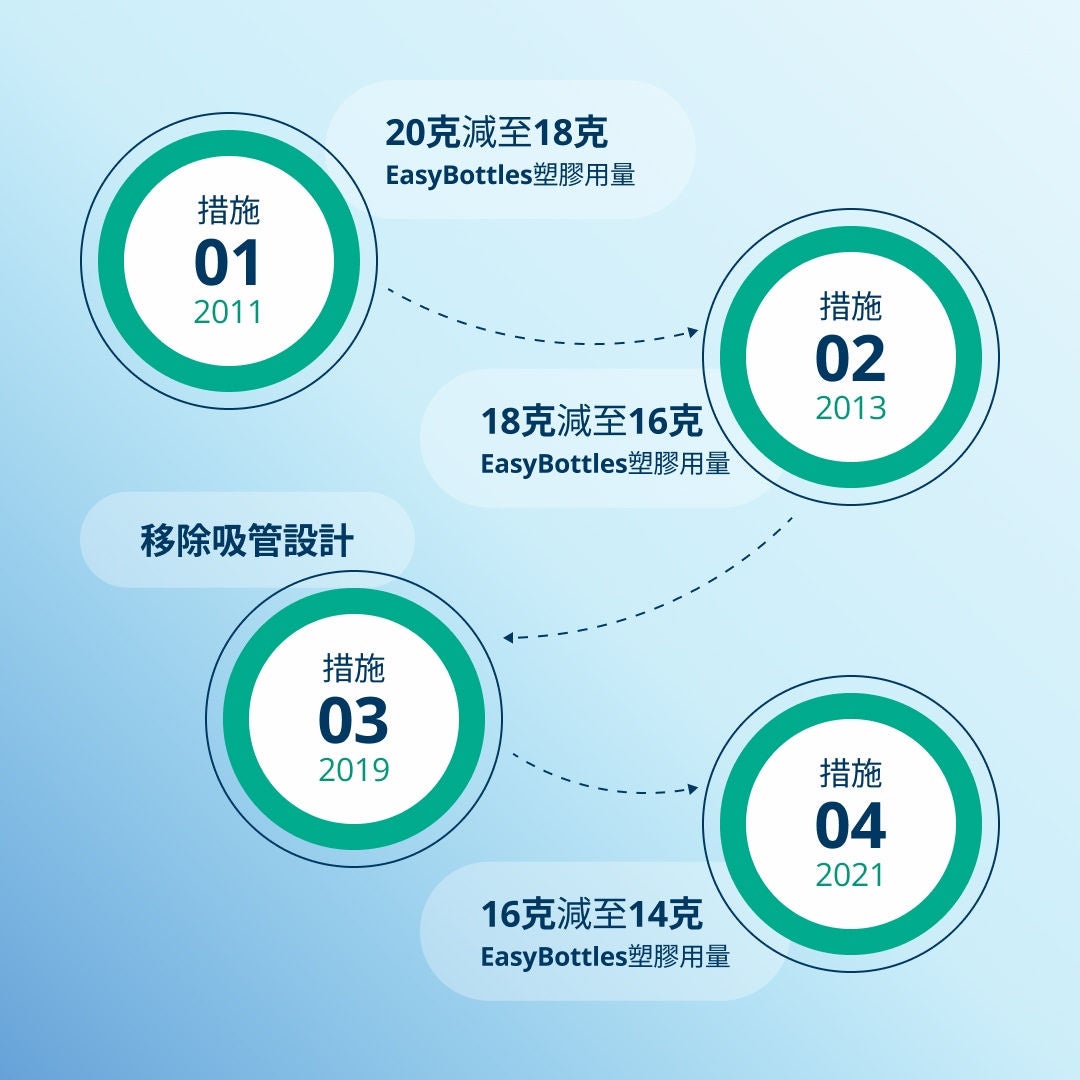
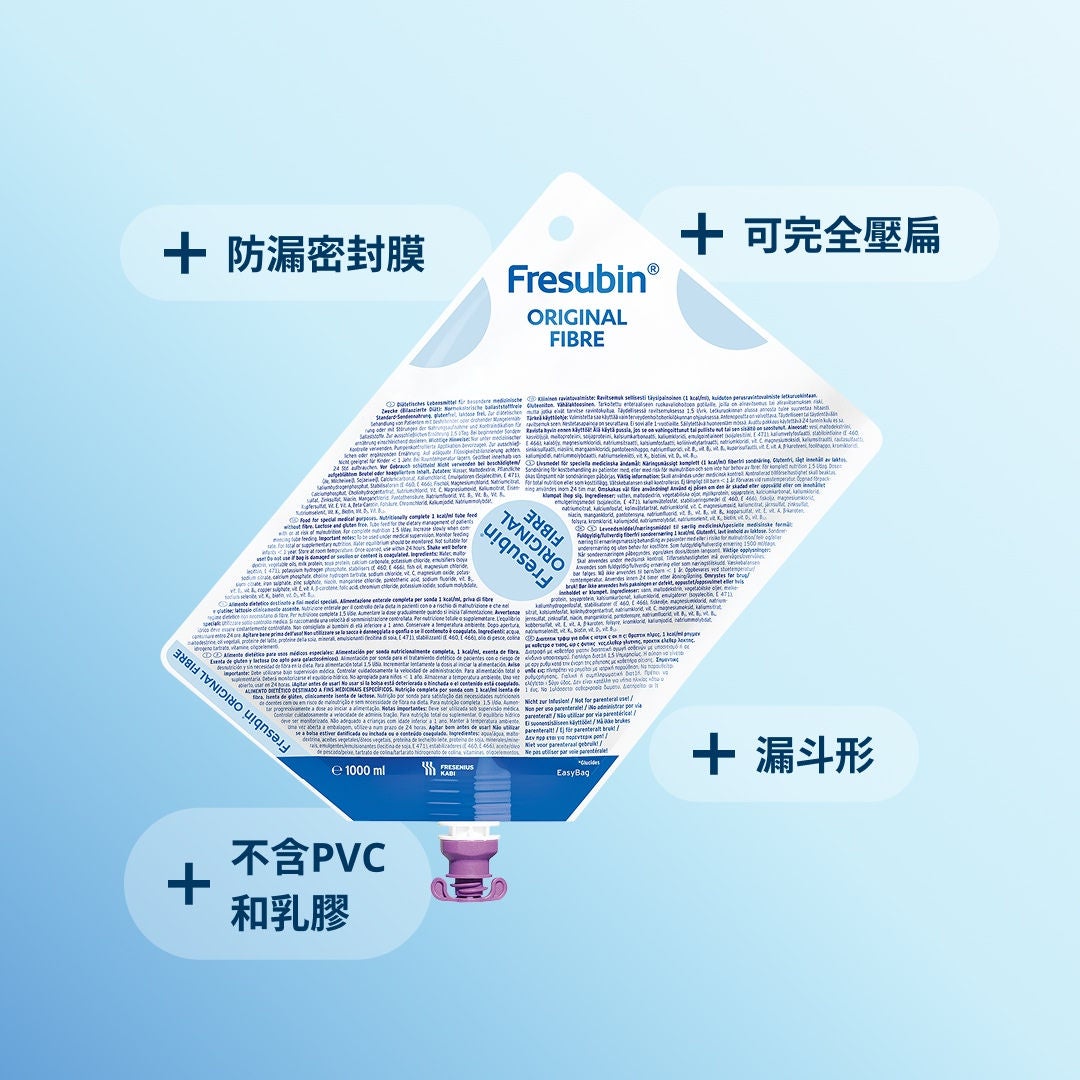
所有與包裝相關的陳述,分別特指 EasyBottle 及 EasyBag 容器。相關數據係基於包裝材料重量的比較,且僅限於容器本身,並不涉及產品配方或更廣泛的供應鏈。除所述的特定包裝設計特點外,並未暗示存在任何更廣泛的環境效益。
1Onyon, Orris, Reyes. Healthcare can lead the way out of the plastic crisis. 2025.
2Eunomia. A prescription for change. 2025.
3Andrady AL, Neal MA. Philos Trans R Soc Lond B Biol Sci 2009;364(1526):1977–1984.
4North EJ, Halden RU. Rev Environ Health 2013;28(1):1–8.
5IUCN, Plastic pollution, https://iucn.org/resources/issues-brief/plastic-pollution
6Fresubin Plastic Saving June 2022
7The reduction target comprises the total emissions of both categories and the target achievement is not analyzed separately by Scope 1 and Scope 2. Of the total amount to be reduced, about 45.9% relates to Scope 1 emissions and about 54.1% relates to Scope 2 emissions.
8Fresenius has an internal recalculation policy that defines a correction of the base value and its triggers. In 2025, the base value was adjusted because the calculation methodology was revised to comply with regulatory requirements. The base-year value of 708,364 t CO2e was increased by 22,680 t CO2e. This adjustment ensures comparability with the reporting year. The targets themselves were not adjusted. The adjustment has no effect on the target achievement as the previous years and the reporting year were recalculated considering the same scope. The base year 2020 is representative in terms of business performance, the available prior-year figures, the associated data quality, and industry benchmarking. Prior-year data was compared accordingly and placed in the business context. if external factors would have an impact, they have been taken into account. - https://report.fresenius.com/2025/annual-report/sustainability-statement/environmental-information/e1-climate-change.html?tabc=5e
9Net zero emissions means that Fresenius reduces its greenhouse gas (GHG) emissions via Scope 1 to 3 as much as possible by 2050 and offsets the remaining unavoidable GHG emissions (no more than 10%).
10Fresenius has defined interim targets for the path to net zero and created a transition plan for climate protection. Detailed information on our climate targets and our transition plan can be found in our audited Sustainability Report 2025.